
- GALAPAGOS CRUISES
- SHIPS
- ALL SHIPS
- ALYA
- AQUA MARE
- AQUA YACHT
- BONITA YACHTNew!
- CELEBRITY FLORA
- DANUBIO AZUL
- ECOGALAXYNew!
- ELITE
- ENDEMIC
- EVOLUTION
- GALAPAGOS LEGEND
- GALAXY DAILY
- GALAXY DIVER II
- GALAXY SIRIUS
- GALAXY YACHTNew!
- GALAXY ORIONNew!
- GRACE YACHT
- INFINITY
- INTEGRITY
- ISABELA II
- LA PINTA
- NATIONAL GEOGRAPHIC DELFINA
- NATIONAL GEOGRAPHIC ENDEAVOUR II
- NATIONAL GEOGRAPHIC GEMINI
- NATIONAL GEOGRAPHIC ISLANDER II
- NATURAL PARADISE
- NEMO II
- OCEAN SPRAY
- ORIGIN-THEORY-EVOLVE
- PASSION
- PETREL
- REINA SILVIA VOYAGER
- SANTA CRUZ II
- SILVER ORIGIN
- CATAMARANS
- DIVE BOATS
- CRUISE LINE SHIPS
- LUXURY CRUISE SHIPS
- MOTOR YACHTS
- SAILING BOATS
- ALL SHIPS
- DEALS
- PACKAGES & TOURS
- ABOUT US
- CONTACT US

10 NIGHT GALAPAGOS & ECUADOR XPLORATION ITINERARY

DAY 1 - QUITO
On the first day of your journey, you'll be greeted at the airport by a Celebrity Cruises representative and transferred to your hotel. Enjoy free time to relax and settle in.
DAY 2 - QUITO - Touring
During a guided tour of the capital of Ecuador, situated at an altitude of 9,350 feet, you'll stand on the equatorial line at the Half of the World Park and Museum, and marvel at the monasteries of San Francisco and Santo Domingo. Your tour director will escort you throughout your Quito stay and serve as your personal concierge. Lunch with a spectacular view of the city, and enjoy a welcome dinner at a local gourmet restaurant.
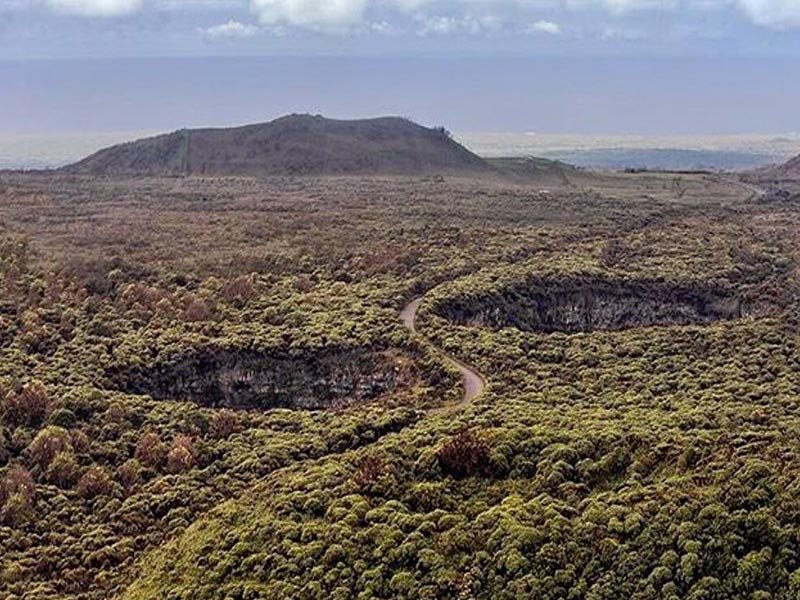
DAY 3 - QUITO to BALTRA EMBARKATION
You will be transferred to the Quito, Ecuador airport to board the flight to Baltra, Galapagos, where naturalist guides will be waiting to transfer you to the ship.
During World War II, Baltra served as a U.S. military base protecting the Panama Canal from enemy attack. Now the cactus-strewn landscapes of Baltra are home to the region's main airport.
Daphne is a satellite volcanic cone located north of Santa Cruz Island. This island is famous for the scientific investigation led by Peter and Rosemary Grant on the finches’ population, one of the most important studies in the field that supports Charles Darwin’s Theory.
During World War II, Baltra served as a U.S. military base protecting the Panama Canal from enemy attack. Now the cactus-strewn landscapes of Baltra are home to the region's main airport.
A zodiac ride into Black Turtle Cove brings you up close to the quiet wonders of the Galapagos. Once inside the cove, we’ll quietly explore the area looking for sea turtles, several species of rays, and sharks.

DAY 4 - SULLIVAN BAY & BARTOLOME ISLAND (SANTA CRUZ)
During a volcanic eruption in the early 1900’s, this area of Santiago was covered with flowing lava. Today, the hardened fields of black rock create a geologic wonderland. We will take advantage of the cool of early morning for awalk to view strange twisting hardened lava flows, collapse craters, and everyone’s favorite, the hornitos orlava ovens. Tall red scoria cones and pioneer plants also dot this unusual and very young landscape.
Bartolome Island hosts one of the region's most often-photographed views and a spectacular geologic setting. Its barren moon-like volcanic landscapes, spatter cones, and pinnacle rock make for a unique stop. It is also home to the endemic Galapagos penguin and provides an excellent opportunity for snorkeling.

DAY 5 - URVINA BAY & TAGUS COVE (ISABELA ISLAND)
Composed of five coalesced volcanoes, Isabela is the largest island in the Galapagos and the most recently active, the latest eruption having occurred in 2015. Here we will see large land iguanas, finches, and if lucky, a giant tortoise or two. In 1954, the intrusion of magma below one of the island’s volcanoes caused part of the bay to be uplifted some 6 meters, and today we can walk through the remains of what was once a thriving underwater reef.
Historically an anchorage for pirates and whalers, this site offers a breathtaking view of Isabela, its volcanoes and spectacular Darwin Lake. Along the shore, seabirds, penguins, sea lions, sea turtles, and nesting flightless cormorants can often be found.

DAY 6 - ESPINOZA POINT (FENANDINA ISLAND) & VICENTE ROCA POINT (ISABELA ISLAND)
Fernandina is the youngest island in the Galapagos and as Darwin wrote, it is “covered with immense deluges of black naked lava.” Along with its extraordinary black lava rocks, this point of land hosts the largest colony of marine iguanas in the Archipelago, along with sea lions and a nesting site for flightless cormorants.
The half-collapsed remains of an ancient volcano make for a spectacular setting at this site. Awe-inspiring cliffs, blue waters, and wildlife create a zodiac ride to remember as we search for sea turtles, penguins, fur seals, the flightless cormorant, marine iguanas, marine mammals, and the oddly shaped form of the elusive sunfish.

DAY 7 - EGAS POINT & ESPUMILLA BEACH (SANTIAGO ISLAND)
With its black sand beach, coastal tide pools, and blue-water grottoes, this stop offers a wonderful taste of the Galapagos and the opportunity to see shore birds, Galapagos Hawks, sea lions, marine iguanas, andGalapagos fur seals. Sea lions, coloUrful tropical fish and sea turtles are often seen while snorkelling.
Located on the northern coast of Santiago Island in James Bay, this beach is a sea turtle nesting site. The favoured attractions here are the Palo Santo forest, beach, and the lovely landscape. The trail passes a small seasonal lagoon where flamingos and white-cheeked pintail ducks are sometimes seen. Continuing on, the trail loops through the arid zone, where some of the tallest Palo Santo trees in the entire archipelago are found.

DAY 8 - PUERTO AYORA (SANTA CRUZ ISLAND
This is the main population centre of the islands, and home to the National Park Service tortoise-breeding center and the Charles Darwin Research Station. You will be able to visit the tortoise-breeding centre and walk through the Charles Darwin Research Station.
DAY 9 - EL BARRANCO & DARWIN ISLAND (GENOVESA ISLAND)
El Barranco, also known as Prince Philip's Steps after the prince who visited in 1965 and again in 1981, is a steep stairway that leads up through a seabird colony full of Nazca and red-footed boobies. Once visitors reach the plateau, the trail continues inland and passes more nesting booby colonies in the thin Palo Santo forest.
Darwin Bay's soft white sand is only the beginning of a spectacular excursion. A trail from the beach takes you into lush mangroves where red-footed boobies nest. Other local wildlife includes sea lions, swallow-tailed gulls, frigate birds, and more. Snorkelling is a must here, as the nutrient-rich water attracts all types of marine life, including sharks, sea lions, sea turtles, and the occasional manta ray. Excursion options: Walk, swim, snorkel and kayak.
DAY 10 - NORTH SEYMOUR ISLAND, BALTRA, QUITO
North Seymour is a small island just north of Baltra. It is home to the largest colony of frigate birds in the Galapagos. While keeping an eye out for male frigates trying to impress potential mates with an inflated red neck pouch, you may also see blue-footed boobies dancing in a timeless courtship ritual. Sea lions and large land iguanas also roam about this rocky terrain. Excursion options include a guided long, rocky walk, zodiac ride and short easy walk, or simply just a scenic zodiac tour along the coast to view wildlife and the geology of the area.
During World War II, Baltra served as a U.S. military base protecting the Panama Canal from enemy attack. Now the cactus-strewn landscapes of Baltra are home to the region's main airport.
DAY 11 - QUITO, ECUADOR
Your Celebrity Cruises representative will once again escort you to the airport for your return. Breakfast is included.